

Most startups fail. Not because their technology is bad. They fail because they build products nobody understands. You might have brilliant technology, sophisticated algorithms, revolutionary features that could change everything. But if users can’t figure it out, they won’t use it. Period.
Good design is invisible. When something works perfectly, users don’t notice the design at all. They just get things done. This is where design thinking helps. It’s a simple approach that puts users first and keeps your product simple.

Photo by Memento Media on Unsplash
The Startup Problem
You’re solving complex problems. Maybe you’re using AI, blockchain, or sophisticated algorithms. That’s great. But here’s the paradox: your users expect simplicity. They want apps as easy as Uber or Instagram. The winners aren’t the ones with the most advanced tech. They’re the ones who make advanced tech feel simple.
Look at Stripe. They didn’t win by having complex payment systems. They won by making payments dead simple for developers. Notion didn’t succeed with fancy databases. They made databases feel like regular documents. Simple. Intuitive. Obvious. That’s design thinking in action.
The Five Stages
Design thinking has five stages. Think of them as steps to understand your users and build what they actually need.
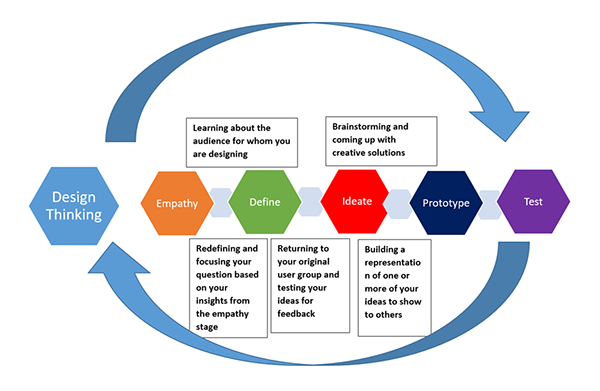
Photo by Wikimedia Commons
Empathize
Start by watching your users. Don’t ask what features they want. Watch. Where do they get frustrated? What workarounds do they create? What makes them give up? For a project management tool, don’t ask users about Gantt charts. Instead, watch how teams actually coordinate their work, where communication breaks down, and what gets lost in translation.
Define
Take what you learned. Write down the real problem. Be specific. Not “users need better project management.” Too vague. Instead: “Freelance designers need to show project progress to clients without making clients learn complicated software.” See the difference? One is specific and solvable.
Ideate
Now brainstorm solutions. But here’s the key: include real users in these sessions. Your engineers and designers can’t guess what users want because they’re too close to the technology, too familiar with the complexity, too comfortable with technical thinking. Use tools like Miro or FigJam to brainstorm with your team and users together.
Prototype
Build something quick. Build it cheap. Don’t write production code yet. Use Figma to create clickable prototypes. Test your core idea before investing months of development. Make it just good enough to test your biggest assumptions. Nothing more.
Test
Watch users try your prototype. Really watch. This isn’t about proving you’re right. It’s about discovering you’re wrong. Use platforms like UserTesting or Maze, or just sit with five users and watch them struggle. Every time they get confused, you’ve found something to fix. That’s gold.
Keep It Simple
Here’s the hard part. You need to hide all your complexity from users. Your backend might use machine learning and real-time processing. Fine. Users shouldn’t know or care. They should ask a question in plain English and get an answer. Nothing more.
Test every feature with the “grandmother test.” If your grandmother can’t use it without instructions, it’s too complex. Simple as that.
What This Looks Like in Practice
Look at how successful startups apply these ideas.
Slack uses progressive disclosure. New users just send messages. That’s it. Advanced features like workflows come later, revealed gradually as users discover they need more power, more control, more options. Users discover them when they’re ready.
Superhuman makes all the technical decisions for you. No endless settings to configure. They choose smart defaults based on research, eliminating decision fatigue and analysis paralysis that plague most email clients. You get a great experience immediately.
Google lets you type a question and get an answer. Simple. You’re not thinking about algorithms or processing. That invisibility took enormous work. Making complexity disappear is hard.
Grammarly prevents mistakes before you make them. No scolding after the fact. Real-time help as you type. That’s thinking about what users need, not just what the technology can do.
Build the Right Culture
Design thinking isn’t a workshop you do once. It’s how your team works every day. Hire people who care about users, not just technology. Make your whole team watch users struggle with your product. Engineers included. It’s humbling. It’s essential. It changes how you build.
Measure success by problems solved, not features shipped. Have tough conversations. When an engineer wants to show off technical details, ask a simple question: “Does the user need this?” When someone wants to add settings, ask: “Can we just make the right choice for them?”
Avoid These Mistakes
Don’t become a feature factory. Users will request features. Lots of them. Listen to the problem behind the request, not the feature itself. Don’t design by committee. Someone needs to make final decisions. Great products feel like one person designed them, with a singular vision and clear purpose.
Don’t over-engineer. Simple solutions work better than complex ones. Ship the simple version first. Don’t ignore accessibility. Design for everyone, not just the average user.
Know If It’s Working
Watch these metrics to see if design thinking is helping.
Time to first value shows how fast new users accomplish something meaningful. Faster is better. Support tickets reveal complexity problems. If users need lots of help, your product is too complex. User retention matters most. Do people come back? If they sign up and disappear, complexity is killing you.
Word of mouth tells the truth. If people tell their friends about your product, you’re doing something right.
Start Today
Pick one feature users struggle with. Just one. Watch five users try to use it. Really watch. Don’t help them. See where they get confused. Write down every moment of hesitation, every furrowed brow, every time they reach for the help button or try to close the window. Now prototype three different ways to fix it. Test all three. Pick the simplest one that works.
That’s design thinking. It’s not complicated. It’s just a disciplined focus on users.
If you don’t have the time or expertise in-house, startup design agencies specialize in guiding founders through this exact process. They bring experienced facilitators who’ve run hundreds of user tests, designers who know the right questions to ask, and researchers who can spot patterns you might miss. Sometimes the best move is getting expert help.
The Bottom Line
Your technology will always be complex. That’s fine. Your job is making sure users never feel that complexity. Start small. Watch users. Build simple solutions. Test everything.
The startups that survive make complexity feel simple. They turn complex ideas into experiences that just work. That’s not just good design. That’s how you build products people love.