

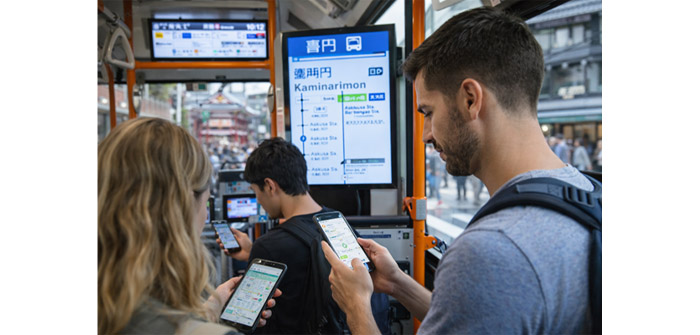
Japan is widely recognized as a global benchmark for public transportation. While its high-speed rail network often receives the most attention, the country’s bus systems play an equally critical role in moving millions of passengers every day. From dense urban routes in Tokyo and Osaka to long-distance highway buses connecting rural regions, buses remain a core pillar of Japan’s mobility infrastructure.
As passenger expectations evolve, digital connectivity has become an increasingly important part of the bus travel experience—especially for visitors navigating the system for the first time.
The central role of buses in Japan’s transport ecosystem
Buses in Japan fill crucial gaps between rail lines, serve residential neighborhoods, and provide cost-effective long-distance travel. Highway buses, in particular, are widely used for overnight travel between major cities, offering an alternative to trains and flights.
For local governments and operators, buses provide flexibility that fixed rail infrastructure cannot always offer. For passengers, they deliver access, affordability, and coverage—especially in regional and suburban areas.
A highly structured system, but not always intuitive for visitors
Japan’s bus networks are known for punctuality and efficiency, but they can be complex for first-time users. Route numbering, boarding procedures, fare systems, and signage vary by city and operator. In many cases, schedules and stop information are primarily available in Japanese.
As a result, international travelers often rely heavily on digital tools to:
- locate nearby bus stops
- understand routes and transfers
- check schedules and service updates
- confirm fares and payment methods
Without reliable mobile access, even a well-organized system can feel difficult to navigate.
Digital tools reshaping the passenger journey
Mobile technology has become a key layer of Japan’s public transport experience. Passengers increasingly depend on:
- real-time bus tracking
- route-planning apps that integrate bus and rail
- digital maps and location services
- QR-based ticketing and mobile payments
These tools reduce uncertainty, shorten transfer times, and improve overall passenger confidence—particularly for those unfamiliar with local systems.
Why connectivity matters beyond convenience
For bus operators and transport authorities, connected passengers are better informed and more adaptable. When delays or service changes occur, real-time updates allow travelers to adjust routes or departure times without overwhelming customer service channels.
From a safety and operational perspective, connectivity also supports:
- emergency notifications
- weather-related service alerts
- crowd management during peak periods
In short, mobile access has become part of the functional infrastructure that supports efficient transit use.
International passengers and the connectivity gap
Visitors arriving in Japan often face a connectivity gap upon entry. While Wi-Fi is available in many stations and terminals, coverage can be inconsistent once travelers move into neighborhoods or between cities by bus.
This is particularly relevant for highway bus passengers, who may spend hours traveling through areas with limited public Wi-Fi access. For this reason, many travelers research mobile data options before arrival, including solutions such as Holafly’s esim for Japan, which allow users to access data without relying on physical SIM cards or local retail purchases.
While providers differ, the broader trend is clear: passengers increasingly expect seamless connectivity to be available from the moment their journey begins.
Lessons for transit systems worldwide
Japan’s integration of digital tools into everyday bus travel offers valuable insights for transport planners elsewhere. Key takeaways include:
- treating connectivity as part of the passenger experience, not an add-on
- designing systems that assume passengers will use mobile tools
- ensuring digital information is accurate, timely, and accessible
As cities invest in smarter transport systems, the passenger’s ability to access information on the move becomes just as important as vehicle design or route coverage.
The future of bus travel in a connected world
Bus travel is evolving alongside broader trends in smart mobility. As passengers become more digitally literate, expectations around transparency, reliability, and ease of use will continue to rise.
In Japan, buses remain a vital component of the transport network precisely because they adapt—integrating technology, responding to passenger needs, and supporting multimodal travel. Connectivity is no longer just a convenience; it is a factor that shapes how effectively public transport systems function.
For transport professionals and agencies observing global best practices, Japan’s bus networks demonstrate how digital access and mobility infrastructure can work together to improve the passenger