

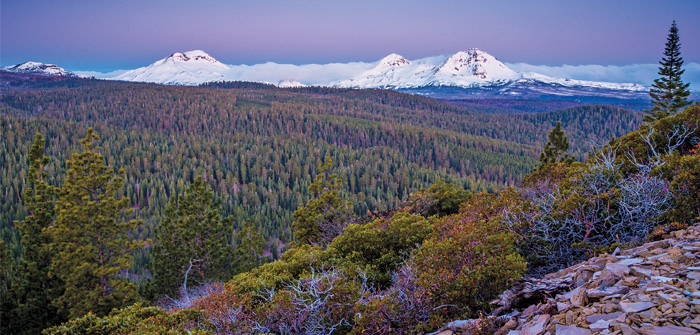
(Bearwallows Roadless Area | Photo by James Parsons)
The Roadless Area Conservation Rule was established back in 2001 through the U.S. Forest Service. The rule protects around 60 million acres from road development, in turn protecting the land from logging, mining and other development. The rule prohibits most road construction, reconstruction and the industrialized harvesting of natural resources like timber, while allowing for certain exceptions around public safety, wildfire management, and access to mineral or treaty rights.
These areas provide habitat for more than 1,600 threatened or endangered species. This protected land also plays a large role in water quality and quantity, providing clean drinking water to millions of Americans across the nation.
According to Oregon Wild, “This critical policy preserves the last of our wild public lands as homes for wildlife, havens for recreation, and natural legacies for future generations. Oregon’s most iconic landscapes — from Larch Mountain in the Columbia River Gorge to Tumalo Mountain near Bend, Lookout Mountain in central Oregon, the forests around Lost Lake, the Oregon Dunes, and beyond — are being put at risk.”
Local areas affected also include popular areas like Hosmer Lake and Sparks Lake, along with others.
A key factor in play here that many people don’t know about involves water quality and quantity. Many people focus on water levels and snowpack, and while these are vitally important factors in water quality and quantity, the preservation of forests is also extremely vital in protecting water. Mature, old growth forests play a vital role in the water cycle, and when they are lost, areas see significantly more soil erosion and sedimentation into local waterways, having a negative impact on both quality and quantity of water.
Aside from significant ecological downsides, losing this roadless rule is also a very unpopular choice; one that has provided a historically low amount of opportunity for citizens to voice their opinions.
When the rule was being proposed back in 2001, the Forest Service underwent a massive public campaign to gauge approval levels for the rule. After more than 600 public hearings and receiving more than 1.6 million public comments, the administration decided to move forward with the rule, after finding widespread bipartisan support.
In contrast, the Forest Service under the current administration has not held a single public hearing, or provided any lengthy opportunity to comment. The current administration announced the rescinding of the Roadless Rule last summer, and started the process with a notice of intent at the end of August. That kicked off a 2-day public comment period. In that very short time, the Department of Agriculture received over 600,000 public comments; an unprecedented number.
Analysis of those comments have shown that the vast majority — as high as 99 percent — support keeping the rule in place. Despite this overwhelming public agreement, it appears that the federal government is doing what they can to move forward with rescinding the Roadless Rule.
To provide civic space that the admin is no longer providing, Central Oregon LandWatch, Oregon Wild, the Oregon chapter of the Sierra Club and more are hosting a community action night centered around public engagement and advocacy for the upcoming release of the draft statement, which will likely be released in April. Forest Service professionals, pro athletes, elected officials, scientists and recreationists will be present to voice their support for keeping these roadless areas undeveloped to protect the land, local water and sites of cultural value. The event will take place at OSU-Cascades on April 6. RSVPs are available and open to the public.
In addition to these publicly-held hearings, citizens in support of keeping the Roadless Rule in place and protecting these lands from development should write to their elected officials about supporting H.R. 3930, the Roadless Area Conservation Act of 2025. This proposed piece of legislation would codify the protections of the widely-popular Roadless Rule, and make it much more difficult for any future admin to develop the lands in question.
The roadless rule has kept wild places wild by protecting millions of acres from logging and mining,” said Alex Hardin of Central Oregon LandWatch. “The level of unprecedented public engagement showed us the value of protecting water, wildlife, ecological diversity, and cultural values. It’s very important for us to speak up and make an impact.”