

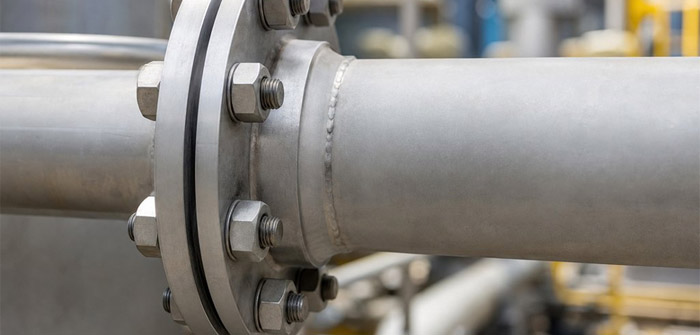
Industrial gaskets are critical components that help to maintain pressure by sealing between two surfaces. A failed gasket could lead to product contamination, equipment damage, loss of containment of hazardous materials, loss of pressure, drips, and unplanned downtime.
Flange Conditions Set the Sealing Requirements
Gaskets are placed between two flanges, equipment covers, valve and pump connections, heat exchangers, pipe connections, and other applications where two surfaces are connected together. Gaskets compensate for the imperfections on flange faces and create a seal to prevent the escape of gas or liquid.
The conditions that a gasket is subjected to in service vary widely from application to application. A gasket that works well sealing water at low pressures may not last long when exposed to high temperatures, solvents, steam, vibration, or harsh chemicals. Factors to consider when choosing the correct gasket material for an application include:
- fluid/gas being sealed
- temperature and pressure
- flange design and face finish
- bolt loading
- thermal cycling, movement, and/or vibration
- contamination issues
These conditions can have a compounding effect on gasket performance. If those demands overlap, specifying industrial gaskets for the actual service keeps the sealing choice tied to the operating conditions. For example, while high temperatures may soften some gasket materials, pressure may tend to blow the gasket out of the joint. Aggressive chemicals may cause some gasket materials to harden, crack, or swell. Repeated temperature changes can loosen bolt loading, leading to leaks in previously well-sealed connections.
Materials Must Match the Service Environment
There are many different gasket materials available, each with their own unique properties to accommodate different applications. Some of the most common types of gaskets include:
Elastomeric gaskets, also referred to as rubber gaskets, are pliable and can accommodate some movement and imperfect flange faces. Different elastomers vary in their performance when exposed to water, fuels, oils, chemicals, and the elements (https://www.sciencedirect.com/topics/engineering/elastomer). While pliability can be an advantage, elastomeric gaskets can also be compressed to the point where they are permanently deformed and will not recover their shape to maintain a good seal when conditions change.
Compressed sheet gaskets consist of fibers held together with a binder material and can be die cut or water jetted into unique shapes. Compressed fiber gaskets can be a good choice for covers, housings, and other applications that require a full face seal. Different grades of compressed sheet material perform better than others when exposed to oils, steam, chemicals, etc. Even when cut from identical shapes, a compressed fiber gasket formulated for use with water may not perform well in a chemical service.
Metallic and semi-metallic gaskets are used in applications that see high temperatures and pressures or extreme thermal cycling. Semi-metallic gaskets consist of a metal component for strength and a softer filler to conform to flange faces. Proper alignment and even bolt loading are critical for successful sealing with metal and semi-metallic gaskets. Even the best gasket will not compensate for poor flange faces, uneven bolt loading, or badly racked piping.
Installation Quality Controls Flange Performance
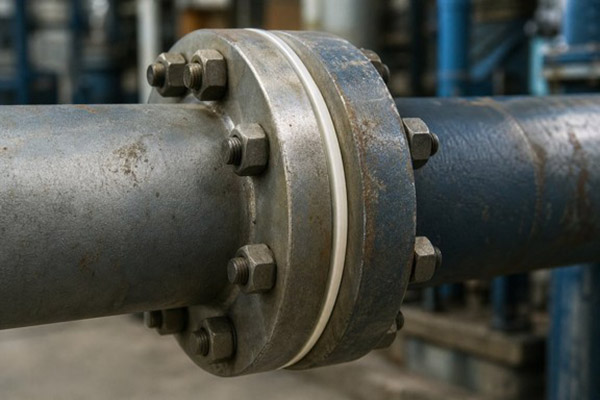
Even the best gasket material will not seal a flange connection if it has been installed incorrectly. Prior to installing a new gasket, always inspect flange faces for corrosion, gouges, warpage, old gasket remnants, and other foreign material that can prevent a proper seal. Bolts should be tightened gradually in a cross pattern to avoid over-compressing the gasket in one area and under-compressing it in another. Always tighten bolts according to flange/gasket torque specifications, not what worked the last time.
A good installation practice is to check for parallelism prior to final bolt tightening. Racked flanges can lead to uneven gasket compression and excessive loading on bolts and equipment connections.
Recurring Leaks Point Beyond the Gasket
While leaks are the most obvious sign of a gasket problem, other indicators include a loss of pressure, frequent bolt retightening, staining around the flange, odors, residue, and abnormal process behavior.
If a particular flange connection continually leaks after re-gasketing, don’t automatically assume it’s a gasket problem. Other potential causes include strained piping, damaged flange faces, vibration, thermal expansion, incorrect bolt selection, and improperly thick gaskets. Simply installing a new gasket without investigating the root cause of the problem can turn an occasional flange leak into a routine maintenance chore.
Successful gasketing begins with good application data: flange size and bolt pattern, product being transported, maximum and normal operating temperatures and pressures, process cycling (heating/cooling, starting/stopping, vibration, etc.), downtime requirements for flushing/cleaning, etc.
Retain the old gasket whenever possible, as it can provide valuable information about the sealing environment (chemical attack, uneven compression, gasket blowout, etc.).
Prior to your next shutdown, take a good look at any flange connections that have given you trouble in the past. Make sure you have a thorough understanding of the application requirements and verify that the gasket material you specify will perform well not just under normal operating conditions but over the full range of operating conditions the connection will see. At shutdown, be sure to inspect flange faces and retain the old gasket for comparison purposes.