

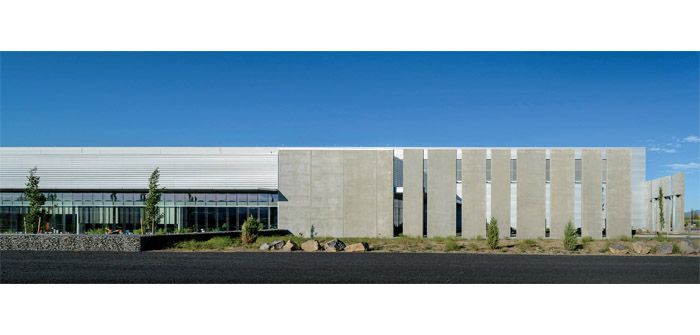
(Meta Data Center | Photo by Alan Brandt)
In 2025, the U.S. saw the construction of more than 1,500 new data centers across the 50 states. That trend of growth continued here in Central Oregon, as the region recently welcomed data centers from both Meta and Apple.
However, residents are understandably questioning the impact of these data centers, as they are still new technology for the region and the long-term effects they will have on the Central Oregon community have yet to be seen.
First, it is important to define what one means by “data center.” Most of the conversation around data centers is actually focused on hyperscale data centers. These are the large data centers built by global companies such as the Meta and Apple data centers in Prineville. Central Oregon actually has many more data centers that are often overlooked because they are not considered large enough to be called hyperscale.
According to Josh Smith, planning director for the City of Prineville, hyperscale data centers are an economic boom for the town, while smaller data centers are beneficial, but still drive a few issues. He said that it is the smaller data centers that create most of the sound/noise issues, as they are “essentially containers filled with air conditioners,” while hyperscale data centers use more advanced cooling techniques, such as liquid cooling, a technique that involves using cold plates for direct-to-chip cooling, which is more efficient and quieter than traditional AC cooling systems.
Also according to Smith, the hyperscale data centers come with a host of funding to ensure that any chosen town is set to handle the increased stress to their infrastructure. From water to power, hyperscale data centers help bolster local systems, providing an overall upgrade to many systems that may not have had the funding for vast improvements, otherwise.
This is echoed by Kelsey Haskett, the EDCO Prineville/Crook County director, who said, “In Prineville, data centers have delivered real, measurable benefits for the community. We’ve seen over $2 million invested directly in our school district, major improvements to local infrastructure like long-haul fiber, innovative water and wastewater capacity building, and strong support for community programs. Just as important, these jobs pay at least 130% of the county average, helping Crook County reach the second-highest average wage in the state. It’s a model of growth that’s creating long-term opportunity for local residents while strengthening the entire community.”
Those jobs Haskett mentioned are here to stay. In Prineville alone, the two hyperscale data centers have provided 600 permanent positions, helping raise the community’s economic status. On top of that, the construction provided hundreds of short-term, high-wage construction jobs per project, for trades including electricians, heavy equipment operators, engineers, project managers and more.
For anyone wondering why Central Oregon, and Prineville specifically, was chosen for these two massive data centers, the answers lie in our environment, and our urban development (or lack thereof).
Central Oregon has a cool, dry climate that saves heavily on operational costs, specifically, power from cooling. Additionally, this region has a very low natural disaster tendency when compared to other cool regions, such as the Oregon Coast. According to EDCO, the region provided access to competitively priced electricity and expanded renewable energy options, along with strong utility partners willing to collaborate on large-scale infrastructure needs. The region provided large tracts of industrial-zoned land suitable for campus-style development and communities like Prineville were proactive in planning for industrial growth. On top of that, Central Oregon has robust fiber infrastructure and proximity to major West Coast network routes.
So why not Bend and Redmond? Smith says it is because of the price of land, and power constraints. Data centers can simply save massive amounts of money by finding communities like Prineville, which are small enough to have cheap and readily available land, and large enough to be able to sustain the infrastructure needs, with a few upgrades provided by the owners of the data centers.
On another note, EDCO provided information on the many local partnerships that have helped create a skilled workforce and address the employment needs for these data centers. Central Oregon provided them with strong partnerships with K-12 schools, community colleges, and universities, which was assisted by over $2 million in grants to the local school district and additional regional education and training investments. In addition, local employers actively collaborate on curriculum, certifications, and career pathways aligned with local jobs.
According to EDCO, the overall impact of these data centers is profoundly far-reaching. They help diversify our economy and reduce our local reliance on tourism, timber, and seasonal industries adding resilience during economic downturns, higher wages and broader economic activity. They provide growth in professional services, construction, engineering, and support industries, increase average household incomes, local spending and community investment, resulting in significant improvements in infrastructure related to wetland restoration, aquifer protection and long-haul fiber. They also help position Central Oregon as a credible hub for high-technology investment, attracting additional tech, manufacturing, and innovation-focused employers. Employers like Meta have invested directly in education, STEM programs, and training partnerships, strengthening alignment between education systems and industry needs.
Overall, data centers are an economic boom that encourages thoughtful planning around housing, workforce, and sustainability, while reinforcing EDCO’s focus on long-term, quality economic growth.