


For years, foreign exchange trading was a part of the exclusive world of banks, hedge funds, and multinational corporations with treasury departments. Most business owners regarded currency fluctuations as something to tolerate rather than something to manage actively.
Today, a growing number of businesses are discovering the power of forex markets as a financial tool that is capable of improving resilience, diversifying treasury exposure, and protecting margins in an increasingly volatile global economy.
Currency Volatility Is Hard to Ignore
For businesses operating internationally, exchange-rate movements have become an important issue to deal with over the past two years. Dollar fluctuations against the sterling and euro have exposed how quickly currency shifts can alter import costs, supplier pricing, and overseas earnings. The same applies across emerging-market currencies, many of which experienced high volatility throughout 2025 as central banks diverged on monetary policy and investors reassessed global growth prospects.
According to the Bank for International Settlements, average daily turnover in global foreign exchange markets climbed to $9.6tn in April 2025, reinforcing forex’s status as the world’s largest and most liquid financial market. This is thanks to the continuous operation of the forex market across London, New York, Tokyo, and Singapore.
The UK remains at the centre of this ecosystem. Data from the Bank of England shows London retained its position as the world’s dominant foreign exchange trading hub in 2025, accounting for close to 38% of global activity.
The message is straightforward: currencies shape profitability, and businesses must learn how to engage with forex markets one way or another.
Treasury Management Is Becoming More Active
Higher global interest rates have changed the opportunity cost of holding cash, and for companies with international trades, currency management is no longer a niche technical function handled by finance departments. The traditional model that was built around parking surplus cash conservatively in low-yield deposits or short-term fixed-income instruments is leaving its place to more active investment methods.
Business owners are learning to manage liquidity better. This is especially relevant for firms exposed to multiple jurisdictions. A US importer sourcing goods in euros while generating revenue in dollars faces a constant balancing act between operational planning and exchange-rate risk. In previous decades, many mid-sized firms simply absorbed that volatility. Today, they are turning to forex trading.
That does not necessarily mean speculative trading. In practice, most corporate forex activity still revolves around hedging future liabilities, smoothing cash flow, or protecting earnings visibility. But one thing is clear: foreign exchange risk management is becoming more important as tighter financial conditions amplify exposure to currency shocks.
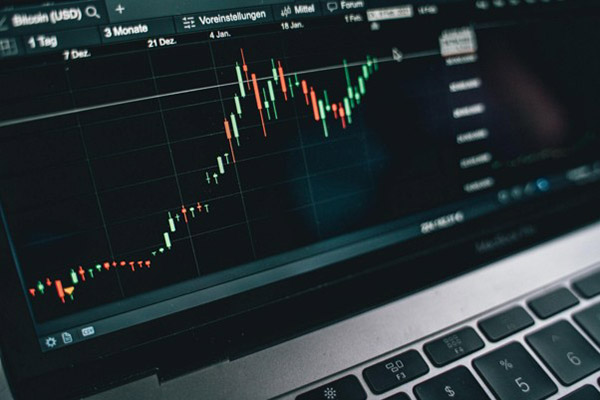
Technology Has Opened the Door to Smaller Firms
Today, sophisticated forex infrastructure is no longer reserved for institutional players. Financial technology platforms have dramatically lowered the barriers to entry. Mid-market firms now have access to real-time analytics, automated execution systems, and currency risk dashboards that once required dedicated dealing desks.
This democratisation has also affected corporate behaviour. Finance managers increasingly use trading platforms to monitor exposure, execute hedging strategies, and respond faster to geopolitical or monetary-policy developments in addition to currency exchange orders.
The acceleration of cross-border payments has also played a role in this. Faster settlement systems help move capital more quickly between jurisdictions, but they also increase exposure to intraday currency movements.
For businesses operating on tighter margins, currency swings can matter more than many executives realize. A 2% or 3% movement in a currency pair may erase profitability on an overseas contract if risk is left unmanaged.
The Definition Of Diversification
The definition of diversification itself is also changing. Traditionally, businesses diversified through operations. They entered new regions, launched adjacent products, or invested surplus capital into property, equities, or bonds.
But recent years have challenged assumptions about correlation and stability. Inflation shocks, banking-sector stress, geopolitical tensions, and uneven growth have all demonstrated how quickly supposedly defensive assets can come under pressure simultaneously.
Against these techniques, currencies offer something different. Exchange rates respond to a distinct set of economic drivers, including monetary policy, trade balances, commodity flows, and political developments. For some businesses, holding exposure across multiple currencies can create a balance against domestic economic weakness.
Export-heavy firms may benefit when the dollar weakens against major trading currencies. Businesses that rely on imported materials, meanwhile, may seek protection against periods of dollar weakness that increase purchasing costs. For companies operating internationally, currency positioning should be part of a liquidity strategy rather than operational administration.
The Risks Are Real and Often Underestimated
None of this should be confused with a corporate endorsement of speculative currency trading. Forex markets are difficult to predict. Interest-rate decisions, elections, commodity-price shocks, and geopolitical headlines can trigger abrupt movements within minutes.
For businesses lacking robust controls, forex exposure can become destabilizing very quickly. In many ways, the businesses approaching forex markets most sensibly are treating them as a mechanism for preserving stability in an unstable world.

Financial Agility Is Becoming a Competitive Advantage
Forex trading will not replace traditional diversification strategies. Nor will it suit every business.
But what is clear is that currency markets are moving closer to the center of corporate financial strategy. The firms adapting most effectively are those recognizing that treasury management by safeguarding cash does not work alone. It is equally important to protect margins more intelligently and build resilience into financial systems before volatility strikes.