
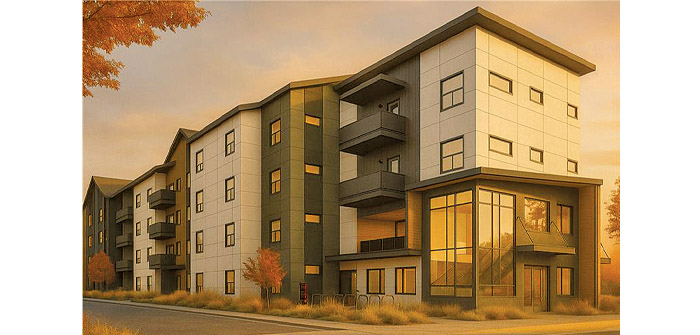
(A recent example shows how AI helped us create a compelling vision without requiring the team to develop every detail upfront. By leveraging AI-driven rendering, we were able to quickly illustrate the concept and communicate the big picture, saving time while still delivering an engaging, realistic visualization | Rendering courtesy of Pinnacle Architecture)
Going into 2026, there’s a shared sense of curiosity and uncertainty about what’s ahead. Here in Central Oregon, climate shifts, funding challenges, and emerging tools are all influencing how we create resilient, thoughtful spaces for our communities.
What We’re Concerned about?
I’ve lived in Central Oregon for 20 years and this is one of the lightest snowfalls I’ve seen! We’re entering another year of heightened wildfire concerns, making fire-resilient design more critical than ever. Climate change is reshaping how we build: lower snowpack levels and warmer winters reduce water availability, increase drought risk, and create ideal conditions for wildfire spread. Designing for fire resiliency isn’t just a trend, it is now a necessity.
Recent projects examples:
Sunriver Public Safety Building: Siding products with natural fire-
resistant properties.
Cleveland Commons: Filtered intake air with MERV 13 filtered for smoke defense, fire resistant siding materials, and minimized vegetation within five feet of all buildings.
NeighborImpact Warehouse: Including defensible space with a rock buffer between the building and the landscaping to reduce ignition risks.
Deschutes Rim Clinic: Metal roofing for longevity and fire resistance.
As we look ahead to 2026, our goal is to ensure multi-family residential and community projects are not only beautiful but built to withstand the realities of a changing climate.
What We’re Hearing from Clients:
Funding will be one of the biggest challenges for community projects in 2026. When budgets are tight, planning ahead isn’t just helpful, it’s essential. Starting early gives communities the chance to prioritize what matters most, explore phased development, and identify funding opportunities before decisions become urgent. One smart first step is a feasibility study. It’s a powerful tool that helps clarify what’s possible, uncover cost drivers, and set a realistic roadmap for success. In fact, in 2025 we partnered with a dozen organizations to do just that, laying the groundwork for projects that will make a real impact. Proactive planning doesn’t just ease financial stress, it keeps projects aligned with long-term goals and ensures they’re built to last.
What We’re Excited About at Pinnacle?
Great design isn’t just about the finished documents. It’s about telling the story behind them. Strong visuals help bring ideas to life, spark excitement, and even secure funding. That’s why we’re embracing AI to create high-quality concept images faster and more efficiently, so clients can share their vision early and often.
The best part? Combining these tools with our team’s expertise means we can deliver compelling visuals at a fraction of traditional costs making strong design communication accessible for projects of all sizes. Technology doesn’t replace creativity, it amplifies it.
Heading into 2026, I’m inspired by the shared commitment I see from partners, community members, and organizations across the region. Together, we’re building places that truly matter, and I’m excited for what’s ahead.
Briana is Pinnacle’s resident and a specialist in healthcare, housing, and civic design. She is an Evidence-Based Design (EBD) certified professional. She bases decisions about the built environment on credible research to achieve the best possible outcomes. With 20 years of design experience, she thrives on working with her clients to explore unique design ideas and integrate proven design solutions.
pinnaclearchitecture.com • briana@parch.biz • 541-388-9897×22