

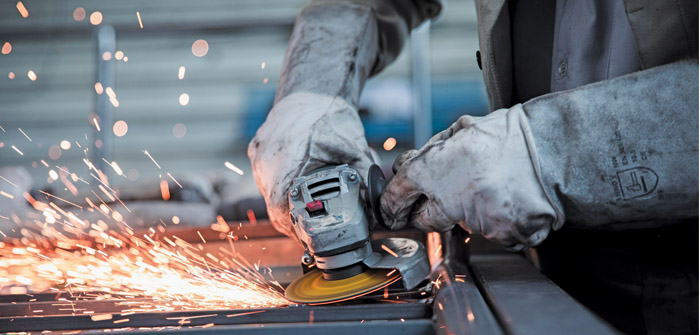
(Photo | by Janno Nivergall from Pixabay)
The Central Oregon manufacturing industry as a whole has experienced more than a few ups and downs over the last several years, yet despite statewide trends still being on the downslope, the local industry has actually grown and diversified.
Many of the biggest players are well known in the community — Bright Wood Corporation employs more than 1,000 people across the region; BASX Solutions reported 1,073 employees across all its Central Oregon locations in 2026 (up from 661 in 2024); Epic Aircraft reported 544 employees; and Keith Manufacturing reported 191.
Number of employees aside, Central Oregon manufacturers cover a wide range of disciplines and niches, from wood products and building materials to aerospace, metal fabrication, electronic manufacturing, outdoor products and many more.
In a statement from EDCO, “The broader story is that manufacturing in Central Oregon has grown and diversified. The Oregon Employment Department’s recent analysis found that Deschutes County manufacturing employment reached a seasonal high of 6,620 jobs in May 2026. Manufacturing business units grew from 265 in late 2010 to 453 in late 2025, an increase of 71%.”
Additionally, it would seem that the industry is balancing itself out, after seeing a long, historic decline in wood products manufacturing; growth in food, beverage, machinery and transportation equipment manufacturing added more than 2,200 jobs between 2010 and 2025.
“The long-term decline in wood products employment, alongside growth in other manufacturing subsectors, is a good example of why diversification matters,” said EDCO.
This growth is likely due to a number of complex factors, but one key factor has been addressing the consistent issues and challenges that the industry as a whole has been facing for years. Most notably, that is housing affordability, and workforce availability.
While housing affordability is still an issue, there have been significant efforts at the state and local levels to increase accessibility. The Bend Chamber has led an initiative with employers and community partners to build more workforce housing as quickly as possible, with the Bend Chamber stating, “Bend’s housing shortage needs multiple strategies that increase the amount and variety of mid-market housing types.”
This initiative came after a 2022 survey showed that, among Central Oregon businesses, 67% saw decreased revenue, 81% had hiring challenges and 91% experienced growth limitations, all due to a lack of workforce housing.
While these housing initiatives are in place, their impact on the community is still mostly in progress. What has more likely helped the manufacturing industry is the many initiatives to address workforce availability through training, education and local partnerships.
According to EDCO, “Redmond High School and COCC are helping create pathways into skilled manufacturing careers. COCC is developing short-term certificate programs in areas such as fabrication, structural steel welding, CNC operation and industrial maintenance, with employer input helping align training with industry needs. COCC has also received a $2.2 million federal grant to develop seven short-term certificate pathways aligned with regional employer needs. Separately, the college is remodeling its existing manufacturing labs at the Redmond campus and adding a 6,500-square-foot build-out, with completion expected as early as winter term 2028. These investments will expand hands-on training opportunities and help prepare workers for the skills local manufacturers need.”
An important note is that these initiatives are not exclusively designed to address the current workforce shortage in the short term; instead, they are designed to create a pipeline that consistently provides manufacturers with skilled workers for the long term, leading to steady and stable growth for years to come.
However, there are still some uncertainties in the industry. According to EDCO, the cost of doing business is another major concern. “Labor, health insurance, raw materials, construction and transportation costs all affect a company’s ability to grow. Tariffs and supply chain uncertainty can add further complications, particularly for manufacturers that depend on imported materials or components.”
Despite this, Central Oregon has seen growth, diversification, and a host of new developments. While AI is on everyone’s minds, it would seem that its current impact on the manufacturing industry is negligible, at least for the time being. “Based on local industry feedback, some businesses are exploring tools to streamline sales, marketing and administrative work, create SOP’s, and run scenario outcomes in manufacturing processes,” said EDCO. “However, it is too early to characterize AI as a sweeping transformation across local manufacturing.”
Continuing, EDCO shared that more broadly, automation and equipment upgrades are practical priorities for manufacturers looking to improve productivity and get more out of their workforce. Automation can take on repetitive tasks and improve consistency, but it does not necessarily mean fewer jobs. Robotics and increasingly sophisticated equipment also require skilled employees to operate, program, maintain and repair them. As manufacturers adopt new technology, the skills their employees need can change, making workforce training and technical education even more important.
Looking at the future of the industry, EDCO points out that communities vary in their available industrial land, existing buildings, workforce, infrastructure and proximity to markets. A company that cannot find the right site or conditions in one community may find a better fit elsewhere in the region. This gives businesses more options and helps Central Oregon compete for investment as a whole.
An example of this would be BASX Solutions, which recently completed a 36,000-square-foot weld shop in Redmond and opened an additional location in Sisters, illustrating how businesses can invest in multiple Central Oregon communities as their needs evolve.
The Central Oregon manufacturing industry is a leading example, across the state and the nation, in how local initiatives, diversification, community partnerships and genuine inquiry into the challenges manufacturers are facing can have a lasting, positive impact. Despite statewide trends, the local industry is, overall, on the up.
In a final statement from EDCO, “There are real challenges, particularly housing affordability and rising business costs. But the region’s diverse manufacturing base, continued efforts to maintain industrial opportunities, skilled workforce and ongoing business investment provide a strong foundation for future growth. Continued investment in industrial sites and workforce training can help manufacturers expand in Central Oregon while creating skilled jobs for local residents.”