
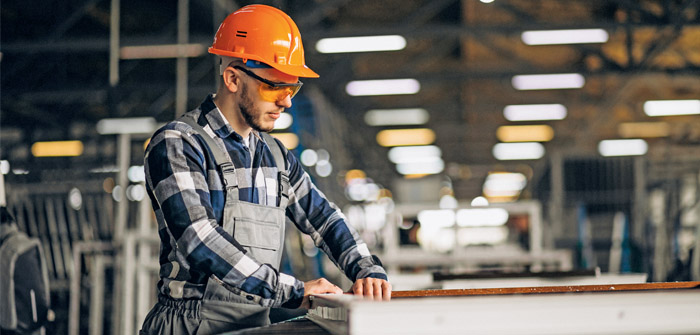
(Photo | by senivpetro)
By the definition, manufacturing is a very broad industry. It encompasses any business or process that takes raw materials and turns them into a finished product through a variety of techniques, from human labor to chemical treatment and machining. As technology continues to evolve, so do our manufacturing techniques, expanding what manufacturers are able to do, and at what capacity they are able to do it.
Like any other industry, manufacturing cannot exist in a vacuum. The trends, challenges and advancements seen in the Central Oregon manufacturing industry are indicative of trends, challenges and advancements in a variety of sectors across Central Oregon and nationally.
“Because of how diverse and all-encompassing this industry can be, it is difficult to talk broadly,” said Steve Curley, the REDI (Redmond Economic Development Inc.) director for EDCO. “Overall, we are still seeing growth, locally. Numbers from the Oregon Employment Department prove that across Central Oregon, we are seeing steady growth. The same can’t be said for the rest of Oregon, which has actually seen a decline, but from that perspective, we locally are actually doing very well. No skyrocketing, but still, positive trends.”
One of the contributing factors towards this positive growth is our local focus on workforce training, as opposed to exclusively trying to attract skilled labor from other markets. Also, our local focus on automation helps deal with potentially our biggest consistent challenges; developing and maintaining a skilled workforce.
Ellen Wayte, the director of marketing and communications, provided a statement from EDCO: “We’re seeing a growing emphasis on training talent locally and deepening supply chains here in Central Oregon. Over time, that focus will position the region for higher-value, specialized manufacturing. At the same time, with a historically tight labor market and relatively high cost of living, manufacturers are increasingly turning to automation to maintain productivity and competitiveness. Together, these trends point to a smarter, more resilient manufacturing base, one that combines local workforce development with strategic use of technology to sustain long-term growth.”
The largest manufacturer in the region by employment is BASX, which is based out of Redmond and has just under 1,000 full-time employees. A representative of their company said, “Across the board, automation and technology are amplifying human expertise, not replacing it — helping us deliver faster, smarter and more reliably for our customers. A great example is our robotic welder, which now handles heavy, repetitive welds for high-volume parts. That shift lets our skilled welders focus on custom, complex fabrication — the kind of work that defines BASX.”
BASX is a great example of how success in manufacturing is heavily dependent on the growth of other industries. BASX’s growth and success largely comes from the growth and success of AI, and the data centers needed to accommodate this burgeoning tech.
“Related to HVAC air handler production specifically, data center requirements continue to trend up and be a major part of our offerings. This growth is driving innovation in design and efficiency, as manufacturers adapt to meet the increasing complexity and scale of modern data center environments. It also underscores the importance of flexible, high-performance solutions that must keep pace with evolving customer needs,” said a representative of the company. “As AI continues to grow, so will this market. It is difficult to ascertain how long this wave will last, but the pace of technological advancement and the increasing reliance on data-driven infrastructure suggest strong demand will continue for the foreseeable future. Manufacturers will likely need to remain agile and innovative to keep up with evolving requirements.”
While growth is still ongoing, there are unfortunately challenges that the industry is facing, nearly across the board. At BASX and beyond, those challenges are maintaining a workforce and dealing with supply chain issues.
“Maintaining employment can be hard,” said Curley. “Having enough employees to fill open positions as companies grow has been a national issue, not just one in Central Oregon. However, on the positive side, Central Oregon’s population is still increasing through natural growth and migration to the area. This helps fuel the workforce, and working closely with education and workforce partners to create more workforce through training is also key to addressing this issue.”
On the topic of supply chains, Curley said, “The issue is not dire, but still present. Power is constrained here in Redmond, for example. Pacific Power is installing a new substation with plans to be done in 2028. If a big project comes in and wants a lot of that power today, they would not be able to fulfill that. The transformers in those substations take two years to set up, which is a supply chain issue. Another company that is expanding is putting in new heavy-duty equipment from Europe, and it will take multiple years to build and ship everything over. These delays, while not nearly as bad as the Covid bottlenecks we saw, are still an issue.”
On the same topic of addressing these two challenges, Wayte provided a statement from EDCO, “The workforce shortage remains a hurdle, especially finding people with the right technical skills. Add to that the high costs for housing, land and utilities, plus lingering supply chain volatility. However, the region’s ongoing efforts to expand affordable workforce housing are starting to make a measurable difference. Likewise, historically tight industrial land availability is easing as developments such as Juniper Ridge progress. And we’re beginning to see a more balanced environment, where employers can find the talent they need and workers can afford to live here. Continued collaboration between industry, education and local government will be critical to sustaining that progress.”
Sustaining growth and positive progress will also hinge on embracing new technologies as they become available and realistically viable on larger scales.
From EDCO, Wayte said, “Many manufacturers are adopting automation, predictive maintenance and data-driven operations to enhance their efficiency and productivity. Excitingly, new tech ventures emerging from the Bend Venture Conference align with these trends, including innovations in AI, analytics and sustainability tools that could directly support the future of smart factories. The ecosystem is not only adopting but also creating the next wave of manufacturing technology. AI will continue to enhance manufacturing by addressing real-time production challenges, anticipating needs and testing process changes before implementation, helping manufacturers operate more efficiently and make better-informed decisions on the production floor.”
A big question looming over the industry lies in local, state and federal regulations, and specifically, in the potential impact of recent tariffs. According to Curley, the local manufacturing industry made preparations early, and are still in the “wait and see” phase of dealing with tariffs.
“Tariffs have been a varying issue,” he said. “Some companies have handled that well by purchasing raw materials ahead of time. You get a lot of back and forth and growing concern, but the things we hear about will be really taking place in 6 months or a year from now, so we have time to respond and stay ahead of it. Depending on how long different industries or materials exist under tariffs, they will have an impact, but so far, the effect is not big. But if supplies run low, manufacturers will be forced to feel the impact of tariffs on their overall costs, and adjust.”
Aside from tariffs, Wayte shared a statement from EDCO regarding state and federal policies, “Federal and state policies are having a real influence on manufacturing. Incentives tied to clean tech and advanced manufacturing are creating new opportunities, though regulatory complexity can still slow projects down. New and enhanced investment strategies in the Big Beautiful Bill are also opening the door for more growth and innovation.”
With a variety of challenges and positive trends, the future of the Central Oregon manufacturing industry is still looking good, overall. EDCO says that the future of manufacturing in Central Oregon is about depth, not just growth. They tell us to expect more niche, precision firms, stronger supplier networks and continued technological advancement. Companies that combine sustainability, automation and workforce development will define the region’s competitive edge.
Curley reaffirms this statement, saying that he is optimistic, looking at projected growth and the fact that several manufacturers, both locally based and nationally based, are expanding to and within Central Oregon. As long as we keep attracting new businesses, it is clear that there is still great potential in the manufacturing industry here in Central Oregon. While national trends don’t always look great, Central Oregon seems to be a microcosm of manufacturing success.