
Framestock©/adobeStock
If you are an engineer, you know how important simulations are in product design. Simulations help engineers predict how a product will perform in real-world conditions. However, for decades, engineering simulations have imposed a compromise on what is desirable or accurate because the realism of the simulation in question was curtailed by its cost and time constraints or more accurately, the effort and time constraints of the engineers.
With advances in virtualisation, the phrase “speed/accuracy trade-off” can finally be left in the past. Now we are ushering in a new era of simulation where accuracy, speed, and interactivity share the stage to facilitate new ways of designing and innovating.
The Evolution of Engineering Simulations
The first generation of engineering simulation tools was developed in the second half of the 20th century. These tools were complex, specialised, and intended for experts. Their realistic and well-defined models gave engineers a sense of how complex systems might behave under different conditions. The downside to these tools was their cost, degree of required expertise, and poor interface with other engineering practices, which might create ambiguity and inefficiencies.
The turn of the 21st century saw the introduction of 2nd-generation simulation tools. The tools included Computer-Aided Design (CAD) systems with Computer-Aided Engineering (CAE) simulation capabilities. This brought about major changes, which helped solve numerous problems that the previous generation had and came with new, important advantages.
Both the technology and function of engineering simulation have seen radical transformations during the 2010s. The emergence of cloud-based CAE technologies allowed for the transition from inefficient and isolated local workflows to more streamlined and collaborative cloud-based workflows as cloud computing became integral to top-level engineering strategy.
Most recently, a new technology, digital twins, which is a virtual representation of real-world systems, has come into the picture, which is a huge change because it allows engineers to run tests on scenarios in environments that are far closer to reality. You can explore a company pioneering this shift here.
Virtualisation as a Game-Changer
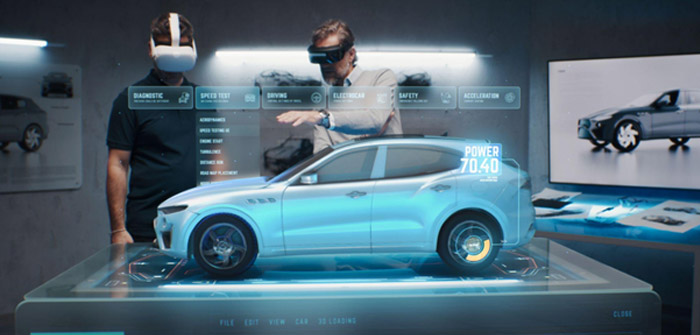
Virtualisation is changing the world of engineering simulations by providing immersive, real-time digital environments that replicate physical systems with exemplary accuracy. It allows engineers to simulate and experience the performance of a product design under dynamic, changing conditions, before the actual build is completed.
Hardware graphics processing unit acceleration, artificial intelligence, and hybrid cloud computing have all played key roles in making this jump possible. Now, engineers can accurately and responsively model things like fluid dynamics, structural stress, and thermal performance in real time.
In the automotive industry, car manufacturers are conducting real-time crash simulations with thousands of variables, such as material fatigue, occupant movement, and sensor feedback, all at the same time. Aircraft design teams are also modelling airflow and heat exchange with a resolution that was not possible, allowing them to test efficiency and safety with reduced prototypes. In each case, virtualisation is extending the realism of simulations and the extent of what can be simulated.
What Lies Ahead: AI and Mixed Reality Integration
In the future, AI and immersive technology, such as augmented reality and virtual reality, will only make simulations even more interactive and realistic. Imagine an engineer walking around a virtual construction site, changing variables and seeing, in real time, the impact on structural integrity or projected costs.
As these types of tools become more accessible and part of standard workflows, small and medium enterprises will also benefit allowing innovation to flourish across the entire engineering ecosystem
Conclusion
Realism is no longer the limiting factor in engineering simulation, it’s the baseline. With virtualisation redefining the engineering design process, the ability to create new levels of accuracy, speed, and interactivity has never been greater. As AI, cloud infrastructure, and immersive technologies continue to develop, the simulations will move from being a design platform to a real-time intelligent partner in the design process.