
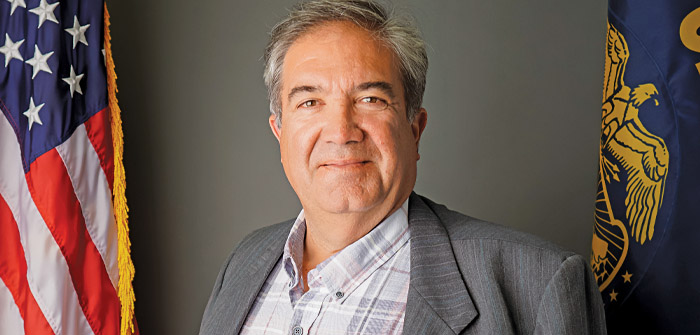
(Steve Forrester)
For more than 17 years, Steve Forrester has helped guide Prineville’s transformation from a community facing recession and double-digit unemployment into one of Oregon’s leading rural economic success stories. A lifelong Central Oregonian with deep roots in Prineville, Steve has focused on building a strong foundation for future generations while preserving the community values that make Prineville unique. As he reflects on his tenure as City Manager, he shares insights on leadership, growth, and the opportunities ahead for the community.
-
You grew up in Prineville and have now served as City Manager for 17 years. How has your connection to the community shaped your leadership style and long-term vision for the city?
My connection provided the foundation of understanding our culture, history, resiliency, and work ethic. We have always been a town of hard workers, ranchers, loggers, and sawmill workers and, and as a result, successful people. Growing up in that environment shaped my management style: honesty, responsibility, owning your mistakes and learning from them, and always doing the right thing.
-
Before becoming City Manager, you spent years in the private sector. What lessons from private industry have influenced the way you approach local government and economic development?
“Refuse to Lose” comes to mind. In my experience in the private sector, there is no safety net. You either make it or you don’t, and if you don’t, you are out of a job. That environment requires efficient decision-making. When faced with a problem or challenge, you analyze the best information available, make a decision, and if the outcome isn’t positive, you repeat the process. You find a way to overcome challenges. In my opinion, government is often too risk averse and inefficient. There are good reasons for that, but I think government officials are often incentivized to avoid making tough decisions.
-
What motivated your transition from the private sector into public service and city leadership?
As the wood products industry retracted during the recession, I was faced with leaving Prineville to continue my forest products journey. Eric Klann had transitioned to the city and asked me to consider city management. I was skeptical to do so, but I was too young to retire, and Kim and I had children in Prineville schools, and business interests locally. As I considered the opportunity, I realized maybe my private-sector experience and local knowledge might bring value to the role. Ultimately, I felt if I was successful managing Prineville out of the recession it would be a rewarding way to give back to the community that made me.
-
When you first became City Manager in 2009, what did you see as Prineville’s biggest opportunities and biggest challenges?
Jobs, jobs, and jobs. We had lost the foundation of the local economy, the forest products industry, and had few prospects beyond becoming a bedroom community for Bend. At the same time, the City was in dire financial straits.
The opportunity was to “right size” city operations, revenues to equal expenses, and then begin leveraging the tremendous attributes we had: available water and wastewater capacity, reliable power, a City-owned railroad, and a viable workforce. Those advantages became the foundation for rebuilding and diversifying our local economy.
-
Looking ahead, what do you see as the community’s biggest opportunities and challenges?
Our biggest opportunity and challenge is managing the success and continued growth of our community.
-
Prineville and Crook County have seen significant economic expansion over the past decade. What do you attribute that success to?
The siting of Meta and Apple here highlighted Prineville and Crook County as a place to do business. Although the media often focuses on the data centers, our community has steadily recruited many other small and medium sized job creators, including McCall Oil, Buckstop Truckware, Bright Wood, CV International, and many others. We have continuously worked with our EDCO partners to leverage our attributes in recruiting to diversify and balance and strengthen our local economy.
-
Average annual wages in Crook County increased from approximately $35,491 in 2011 to more than $77,800 in 2023. What factors do you believe drove that dramatic increase?
The entire city team, including staff and council, have remained focused on creating an environment in Prineville that attracts family wage job creators. We’ve been committed to operating at the “speed of business” when opportunities arise to recruit businesses with good jobs to Prineville. Data center construction workers, and direct jobs drove the increase to a large extent, however, city leaders recognized the importance of diversity and have remained focused on creating that balance.
-
How important has infrastructure planning been to Prineville’s ability to attract and support new industry?
Absolutely critical! Our overnight success took about 20 years. During the depths of the recession, the City recognized that we had to start building the foundation for the future if we were going to survive. Despite limited funding, we partnered with the County, OID, and state and federal agencies to strengthen key infrastructure, including water, wastewater, transportation, and broadband. As a result, we were prepared to act quickly when funding and opportunities presented a path forward.
-
How do you balance managing growth and economic expansion while still preserving the character and qualities that make Prineville special, especially as many rural communities across Oregon struggle to remain economically viable?
Family wage jobs! In my opinion, the quickest way to lose a community’s heritage and culture is not having enough family wage jobs and opportunities for local families to thrive generationally. Of course, not everyone will stay in their hometown. However, when opportunities are plentiful to make a good living locally, we can better hold on to our history and culture over time by providing local career paths for those entering the workforce after high school, trade school, or college.
-
What role have partnerships played in Prineville’s success – whether with Crook County, Economic Development of Central Oregon, businesses, state agencies, or educational institutions?
Extremely important and strategic. Our community’s success is directly related to our partnerships amongst the local governments and agencies, state and federal, and our partnerships with the private sector. The city has intentionally invested in cultivating those relationships, and continues to do so today.
-
Many communities struggle to prepare for growth before it happens. Prineville often seems to have planned ahead. How important has long-term planning been to the city’s success?
Very important. This is an area the private sector has understood and implemented for decades. Government often loses or shifts focus with elections and leadership changes. It is one thing to develop long range models, and quite another to build a strategy that becomes foundational over time. Prineville is successful in developing and implementing long term strategies through our policies and budget process. Those policies, budgets, and processes have become foundational and proven effective. They are certainly flexible and can be adjusted as needed, but the overarching process and strategy is well ingrained into the city’s culture.
-
What industries or sectors do you see as the biggest drivers of Prineville’s future economy over the next 10 to 20 years?
Certainly, tech will be continue to be a significant factor in our future, but I think it will change as well. Our focus will remain on leveraging Prineville’s strengths to attract a diverse mix of job creating businesses and continue building a resilient local economy.
-
The City has invested heavily in water resiliency and infrastructure. How critical has that been in supporting economic development in Central Oregon?
Again, our overnight success in water resiliency started about 20 years ago. The foundation was the 2014 federal legislation that provided long term certainty for both our farmers and the City while supporting environmental stewardship. The development of our Aquifer Storage Recovery (ASR) system proactive water right management have positioned Prineville to meet economic and residential water demands well into the future.
-
What advice would you give other rural communities trying to create sustainable economic growth?
Know your attributes. It costs very little to evaluate what your community has to offer, whether that is power, water, natural resources, transportation assets, or workforce strengths. Then work with partners like EDCO to determine how to leverage those assets. Too often communities focus on what they do not have, such as money. Successful communities focus on what they do have and build from there.
- What accomplishments are you personally most proud of during your time as City Manager?
First and foremost, I’m most proud of the team we’ve built at the City of Prineville. Their talent and dedication have positioned the city for long-term success. I’m also proud of the city’s strong financial foundation and the investments we’ve made in water, streets, and wastewater infrastructure. Finally, I credit the City Council for embracing a long-term vision and empowering staff to plan for the future, helping ensure Prineville remains a strong and stable community for generations to come.