
For nearly six decades, J Bar J Youth Services has grown by paying attention.
When young people in Central Oregon have faced a need without an answer, the organization has looked for a way to respond. What began in 1968 as a residential program for boys has grown into a network of programs serving youth and families through residential treatment, shelter and housing, mentoring, family support, anti-trafficking services, education and more.
That growth has never simply been about becoming a larger organization. It has been about building the right resources at the right time — and continuing to evolve as the needs of young people and the community around them change.
Today, that evolution is taking several new forms.
Building More Than a Building
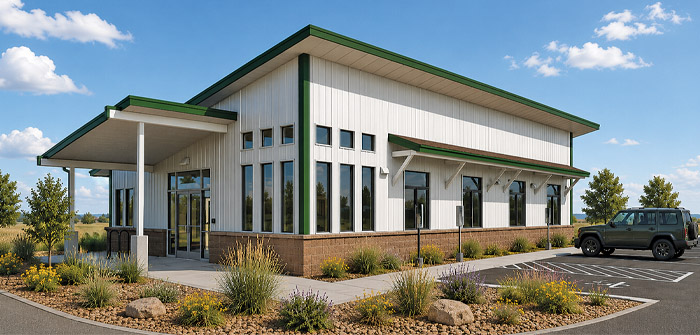
Construction is underway on a new Support Center at the J Bar J Boys Ranch campus, bringing the organization’s central administrative and support services together under one roof.
For an organization with programs and staff working across Central Oregon, the new facility will create something deceptively simple but increasingly important: room to work together. Dedicated meeting space, workstations for visiting program staff and centralized administrative services will make it easier for teams to collaborate, share resources and support the programs doing the direct work with youth.
But perhaps the most important part of the project is what happens to the building administration leaves behind.
The current administration building will be transformed into transitional housing for young people moving forward from residential treatment at J Bar J Boys Ranch. It will offer an important step between the highly structured environment of treatment and a return to life in the community — a place where youth can practice the skills they have learned while continuing to receive support as they prepare for greater independence.
It is a project designed to solve two needs at once: strengthening the infrastructure behind J Bar J’s programs while creating more opportunities for the youth they serve.
That kind of thinking is increasingly important for nonprofits. Every dollar, every building and every partnership needs to work harder. The new Support Center is an investment not only in space, but in J Bar J’s ability to serve Central Oregon efficiently and sustainably for decades to come.
New Ways to Learn, Connect and Grow
Innovation is also happening within J Bar J’s work with youth.
Through its Equine Inclusive Treatment program, young people across J Bar J programs have opportunities to develop relationships with horses and, in the process, learn more about themselves.
Horses offer immediate and honest feedback. Young people learn to pay attention to body language, boundaries, trust and communication. They practice emotional regulation, problem solving, self-advocacy and healthy relationship skills in real time.
For youth who may have spent years hearing adults tell them what they need to change, the experience can be remarkably different. A horse responds to what is happening in the moment.
One student described that connection simply: “Ray has brought me great happiness that I haven’t felt in a long time.”
Those moments are why J Bar J continues to explore new approaches. Innovation in human services doesn’t always mean new technology or a new system. Sometimes it means finding a different way to reach a young person — and giving them another opportunity to discover what they are capable of.
Expanding the Conversation
This year, J Bar J is also trying something entirely new: a podcast.
LIFT — Leaders Inspiring Forward Thinking — brings J Bar J Chief Operating Officer Keith Riggs together with community leaders, experts and changemakers for conversations about the issues shaping Central Oregon.
The podcast reflects a broader understanding of what it means to serve young people well. Youth do not grow up separately from the communities around them. Housing, education, economic opportunity, public policy, strong families and healthy communities all influence the futures available to them.
LIFT creates space for thoughtful conversations about those connections and for the people working across sectors to learn from one another.
For J Bar J, it is another form of community building — and another way to ask a question that has guided the organization throughout its history: What can we do better for the young people growing up here?
A Safe Place in Redmond — and a Door That Stays Open
Sometimes growth means building something entirely new. Sometimes it means making sure people know a resource already exists.
In Redmond, Cascade Youth & Family Center’s Canal House provides transitional living and support for young people experiencing homelessness. Its presence means youth in Redmond don’t have to make their way to Bend before they can find a safe place to sleep, a caring adult or help figuring out what comes next.
One young man’s story shows what that support can make possible.
In early summer, at just 17 years old, he reached two milestones on the same day. That morning, after months of hard work, he walked across a stage and received his GED. Later that day, he received another important piece of paper — and the keys to his first apartment.
He was officially living on his own.
His story didn’t end when he left Canal House.
He continued calling staff to check in and stopping by to visit. On New Year’s Eve, now 18, he asked if he could spend the evening at the program. It happened to be life-skills night, and the young people were making vision boards about housing, goals and their futures.
He joined them.
This time, however, he wasn’t the new kid trying to understand the rules. He was the young adult explaining what he had learned — how to pay an electric bill, file taxes, submit a maintenance request and set realistic goals.
When another young person arrived at the program speaking only Spanish and struggling to connect, the former resident was there again. He spoke with him in Spanish, exchanged phone numbers and helped a new young person feel a little less alone.
It is difficult to imagine a better measure of success.
A young person came through the door needing support. Later, he came back through that same door because he had support to give.
Growing Alongside Central Oregon
J Bar J Youth Services has been part of Central Oregon since 1968. Today, it is the region’s largest social services organization helping youth, their programs provide a continuum of support for young people and families.
J Bar J Boys Ranch and J5 provide residential treatment and short-term stabilization for adjudicated boys, supported by the J Bar J Learning Center and hands-on vocational education. Big Brothers Big Sisters of Central Oregon connects young people with caring adult mentors. Cascade Youth & Family Center provides crisis intervention, street outreach, emergency shelter, transitional living, independent living and supportive housing for youth experiencing homelessness or family crisis. Grandma’s House provides shelter and support for pregnant and parenting youth. Kindred Connections surrounds families in crisis with practical support and caring relationships. The at:project provides comprehensive support for survivors of human trafficking.
Across these programs, the circumstances may be very different, but the goal is remarkably consistent: give young people safety, support, skills and opportunities so they can build futures of their own.
Central Oregon has changed enormously since J Bar J first opened its doors nearly 60 years ago. The challenges facing young people have changed with it.
So J Bar J keeps changing, too.
A new building. A new place for young people to take their next step toward independence. A horse offering a lesson that couldn’t have happened in a classroom. A conversation between community leaders. A shelter in Redmond where a teenager can find safety — and one day return to show someone else the way forward.
Growth, at its best, isn’t about becoming bigger.
It’s about becoming better able to meet the moment —
and building a community where every young person has the opportunity to move toward a stronger future. Every young person deserves the opportunity to thrive.